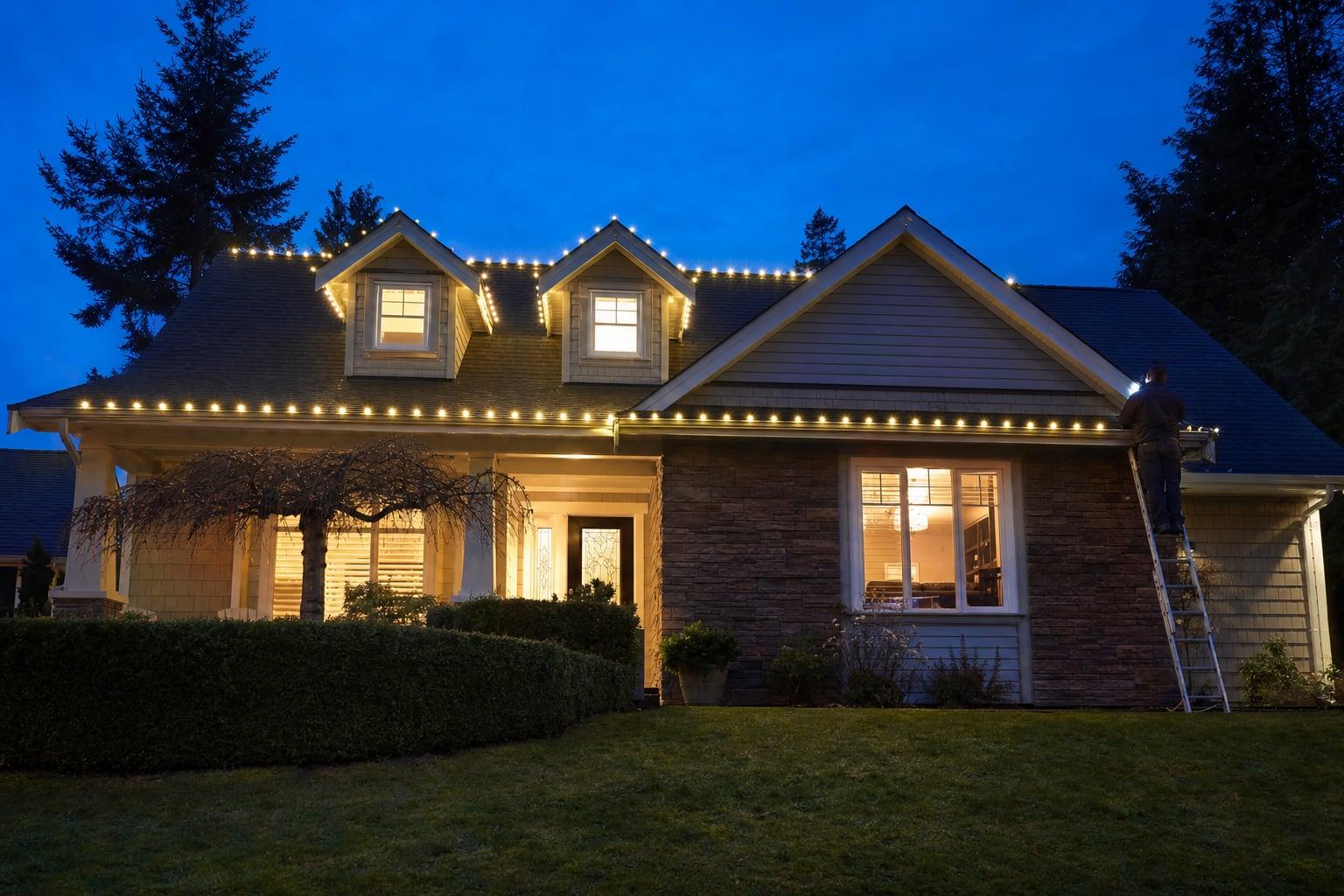
What goes wrong with Christmas lights in Surrey
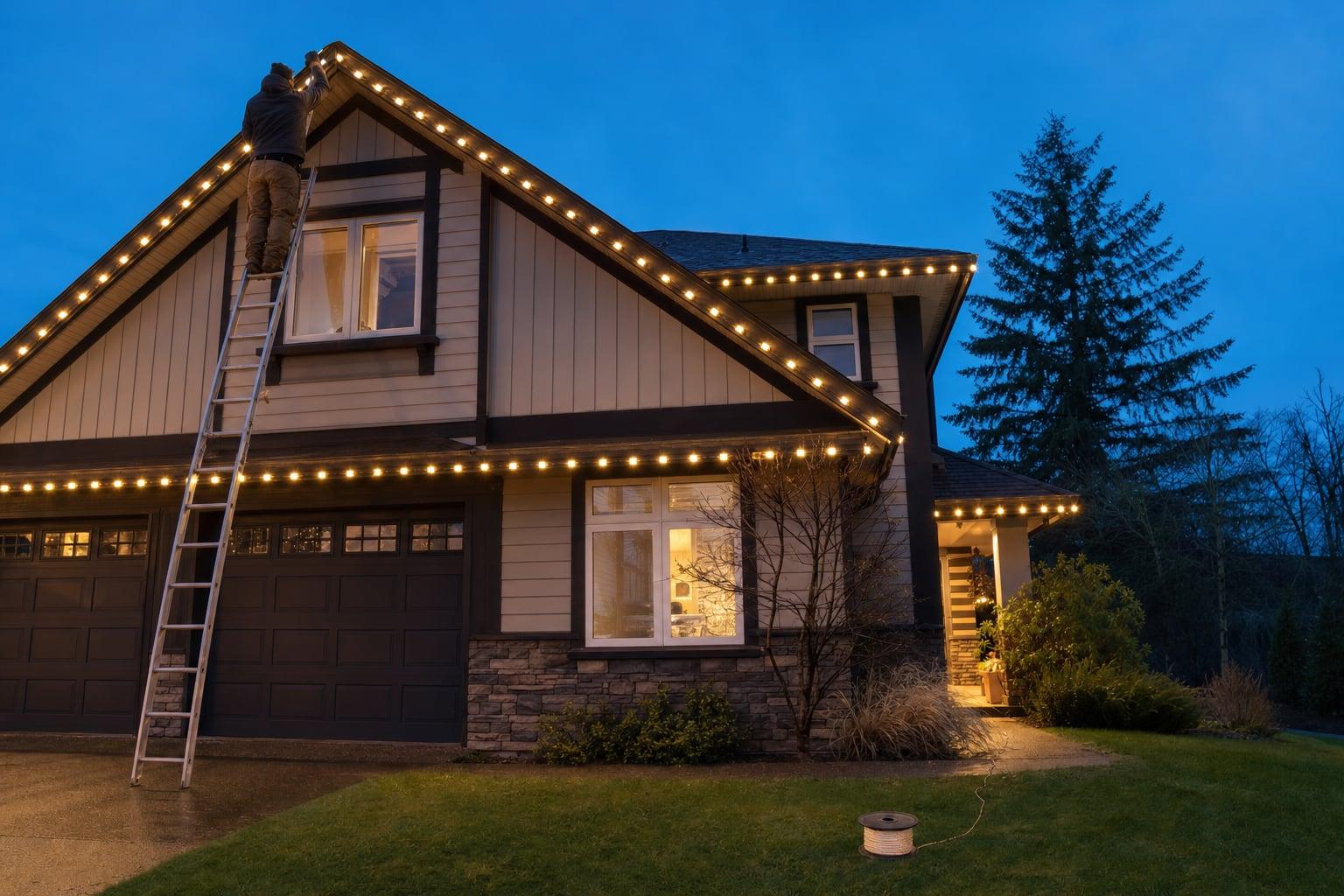
Surrey has a lot of large two-storey homes with tall front peaks, especially in Morgan Creek, Fleetwood and South Surrey. Lights up there take the wind, and one loose clip can drag a section down. Older parts of the city have big front cedars and hedges, and wet branches rub on wiring all season.
These are the faults we get called about most.
- Half a strand out with no obvious bad spot
- An outdoor plug that trips every time it rains
- A timer that no longer switches the lights on
- One section of the roofline gone dark
- Lights pulled down by wind or a falling branch
- Corroded plugs where strands join
On many Surrey homes the outdoor plug sits far from the roofline. That means long runs with several joins, and every join is a place for water to get in.
If you have bins of lights in the garage and a ladder you would rather not climb, this is the job we are built for.
How we find the fault and decide repair or replace
We trace the problem section by section. On a tripping plug, we usually find a join lying in a puddle or an unsealed connection. On a half-dead strand, we check the bulbs and fuse first. On older strands that is often the cause.
Sealed LED strands are different. If the bad section can't be repaired, replacing the strand is the better buy. The same goes for cracked wire or strands with several faults. If a few spots are out on a strand in good shape, we repair it.
When we re-hang anything that came loose, we use clips only. No nails and no staples, so your fascia and shingles stay as they were.
Many repairs take under an hour. Finding a fault across a whole house can take longer. The price depends on how many faults there are, how high the work is, and whether any strands need replacing. We explain that before we start.
Rain, wind and frost on Surrey roofs
Rain totals in Surrey are lower than in Vancouver or on the North Shore, but wind and rain still arrive by November. That is when wet connections and loose clips show up. South Surrey gets more sun near the bay. Inland areas like Cloverdale and Clayton see slightly colder winter nights.
Those colder nights can leave frost on roofs in the east of the city. When that happens, morning roof work may need to wait. We move roof work when it is slick or windy, and we don't push a visit onto a roof that isn't safe.
If your plug keeps tripping, leave it off. Don't keep resetting it. A plug that trips is telling you something is wet or damaged, and the safe move is to call it in and let us trace it.
Repair is booked alone. If you also want the lights taken down, removal happens in January and can be booked separately.
Suites, townhouses and strata rules
Many homes in Newton and Guildford have suites. The outdoor plugs may not be on the owner's panel, so a tripping plug can mean a circuit you don't control. Tell us about the layout when you book, and we will plan around it.
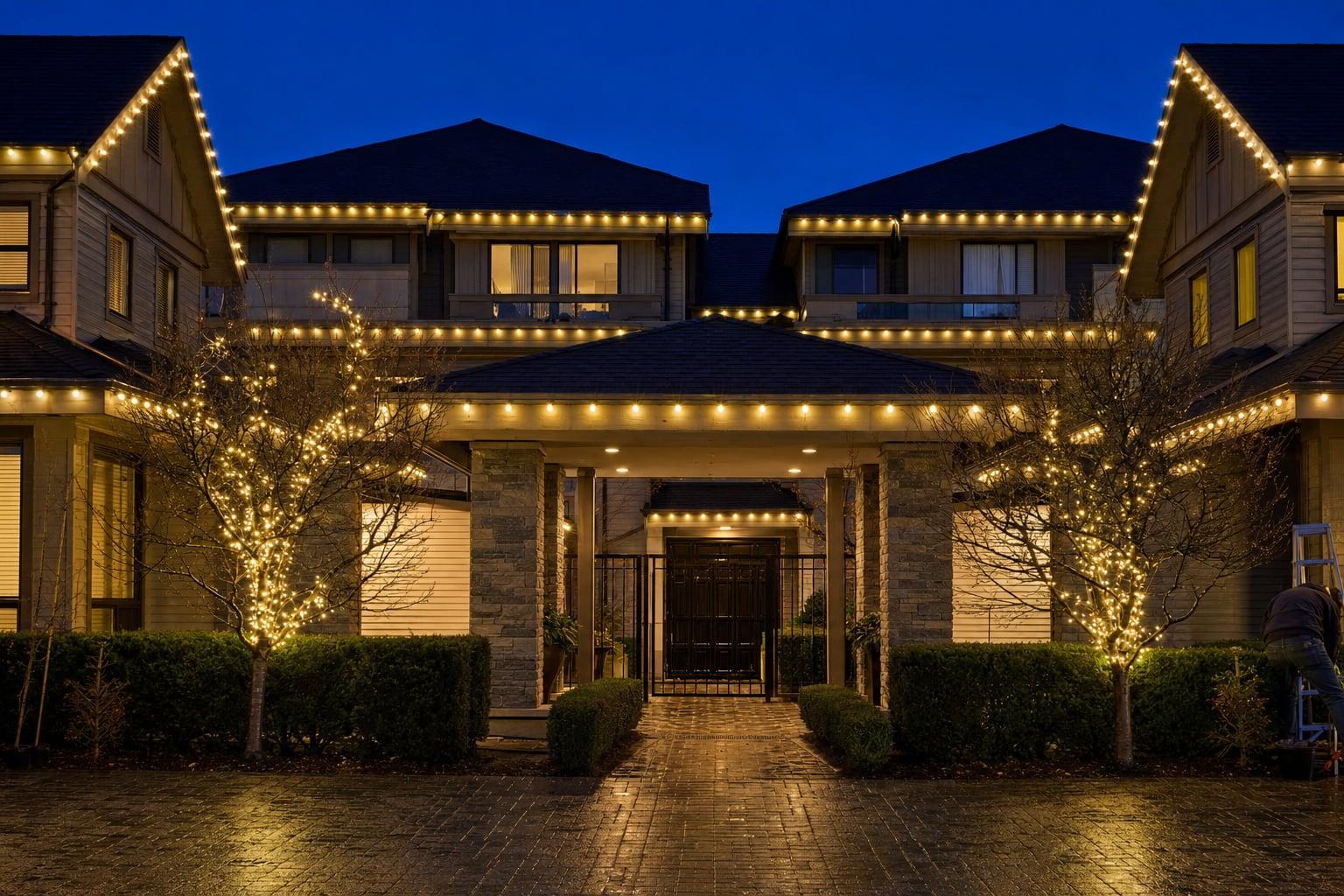
Large townhouse complexes in Clayton and Grandview often set rules on what goes on the exterior. If your lights are on a strata building, check what your council allows before we visit. We also work with stratas, low-rise condos and storefronts, so a repair on common property is something we can quote.
If someone else hung your lights, that is fine. Tell us who put them up if you know, and send a photo of the part that is out. It helps us arrive with the right parts.
There is no program to join and no yearly plan. You hire us for the one job, and that is the end of it.