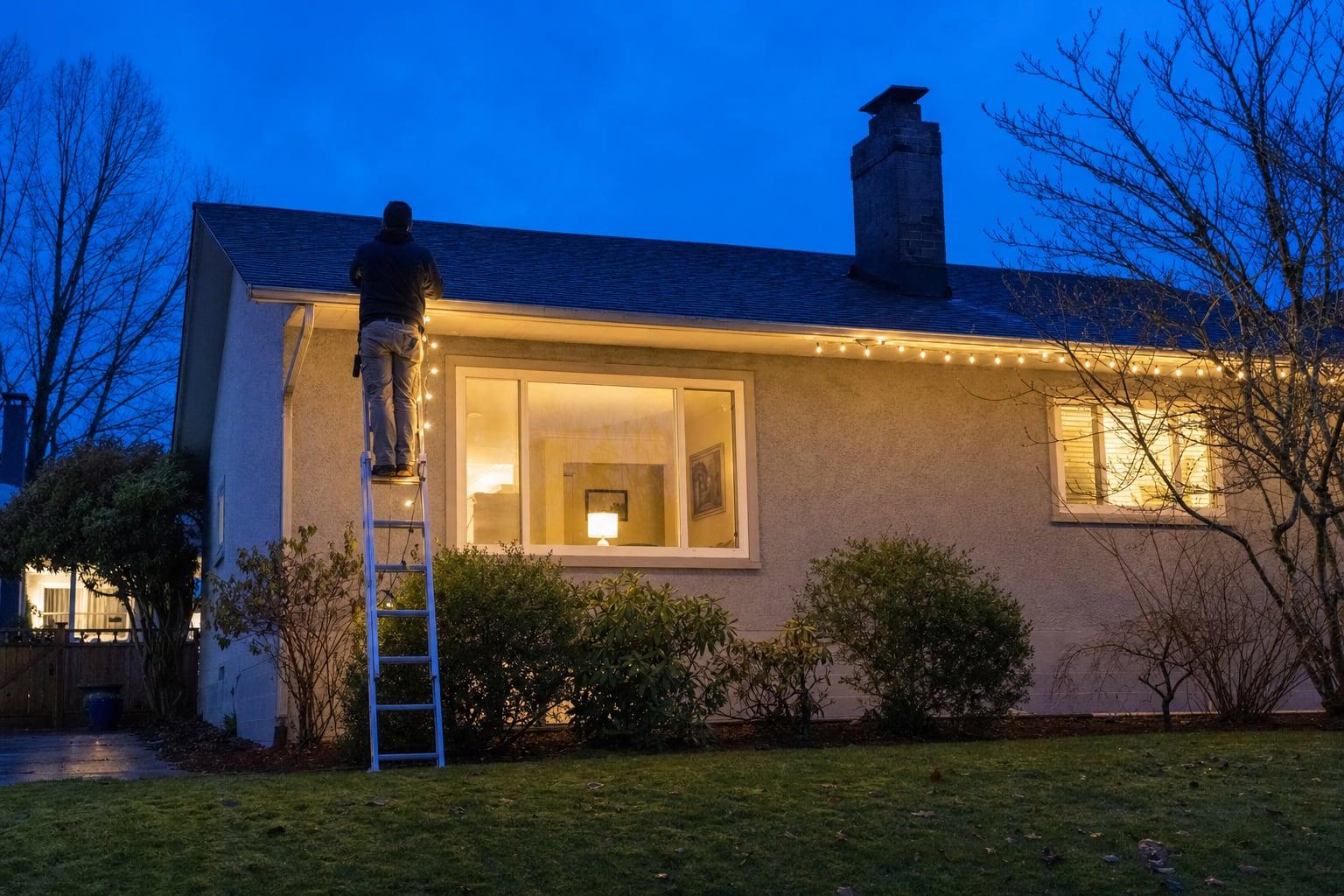
Why Vancouver lights stay up past January
Vancouver gets most of its rain from October to April. By January the roof is wet, the gutters are slick and nobody wants to climb up there. That is how lights end up on the house in February.
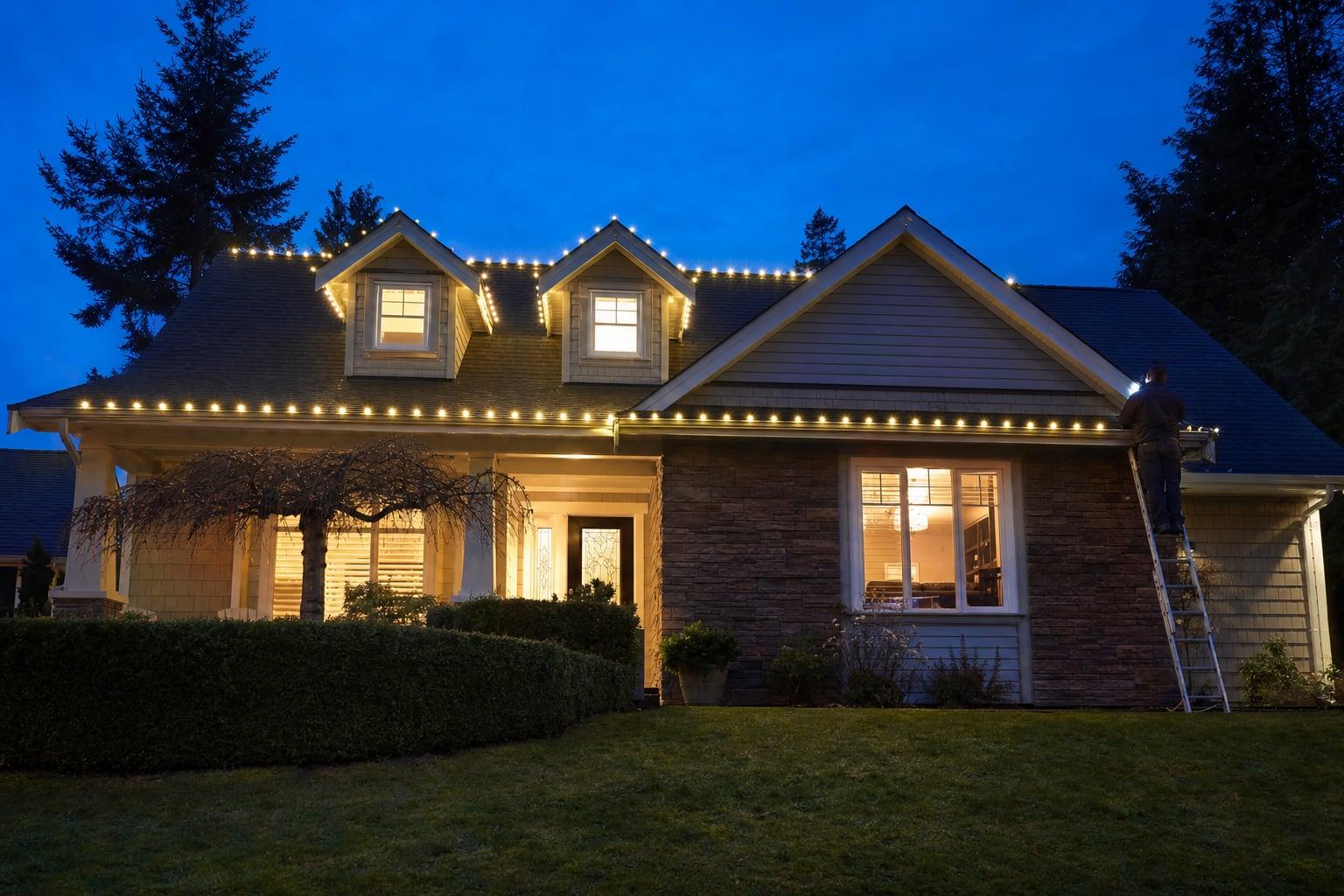
On the west side, mature street trees shade and drip on roofs, so rooflines stay damp and mossy all winter. Character houses in Kitsilano, Dunbar and Point Grey have steep gables, dormers and porches that make a ladder job harder than it looks. On a 33-foot lot there is often little room beside the house to stand a ladder at all.
If you are done with the ladder and have bins of lights waiting in the garage, this is the job to hand off. We pick a dry window in January and do the work from the roofline down.
What a removal includes
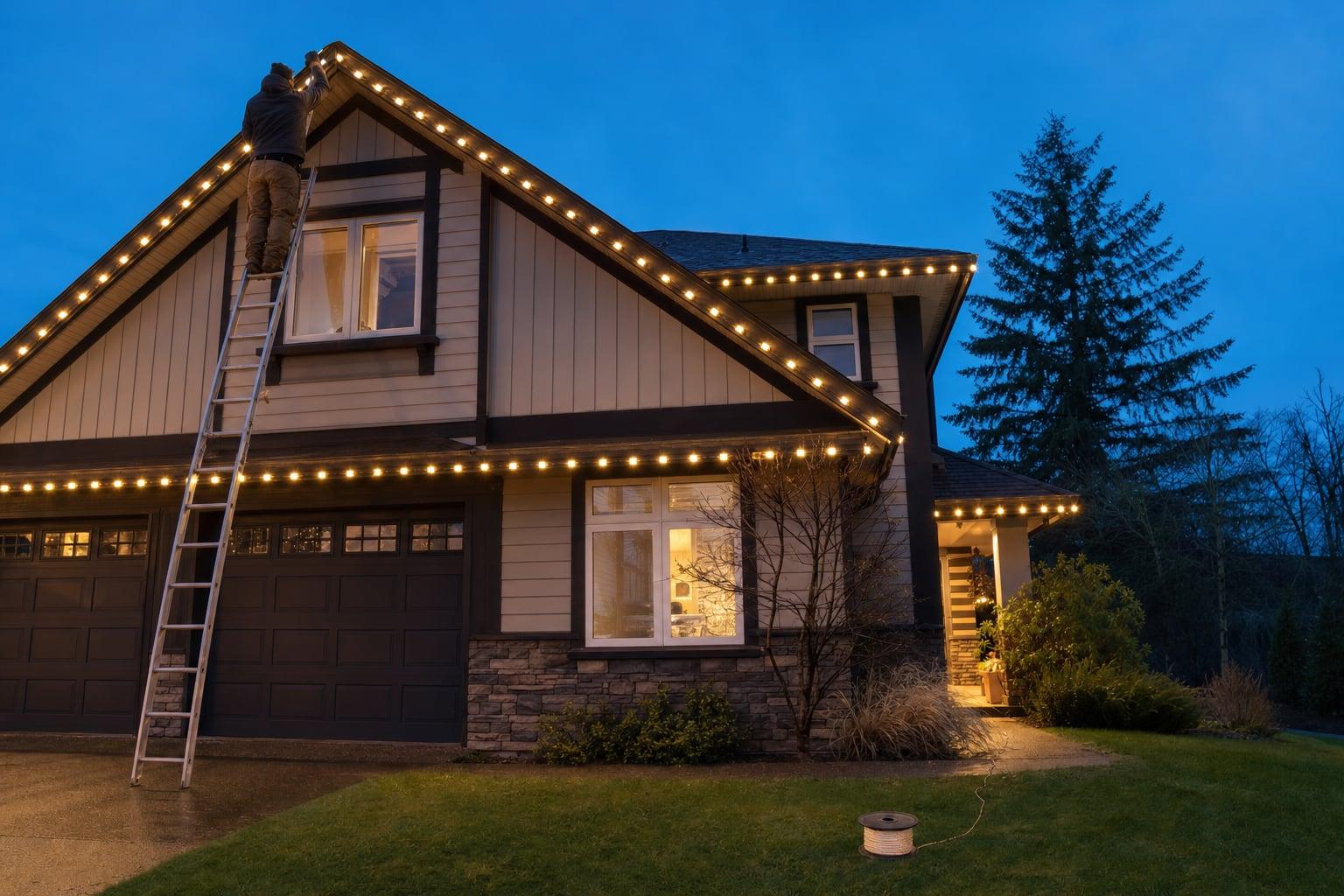
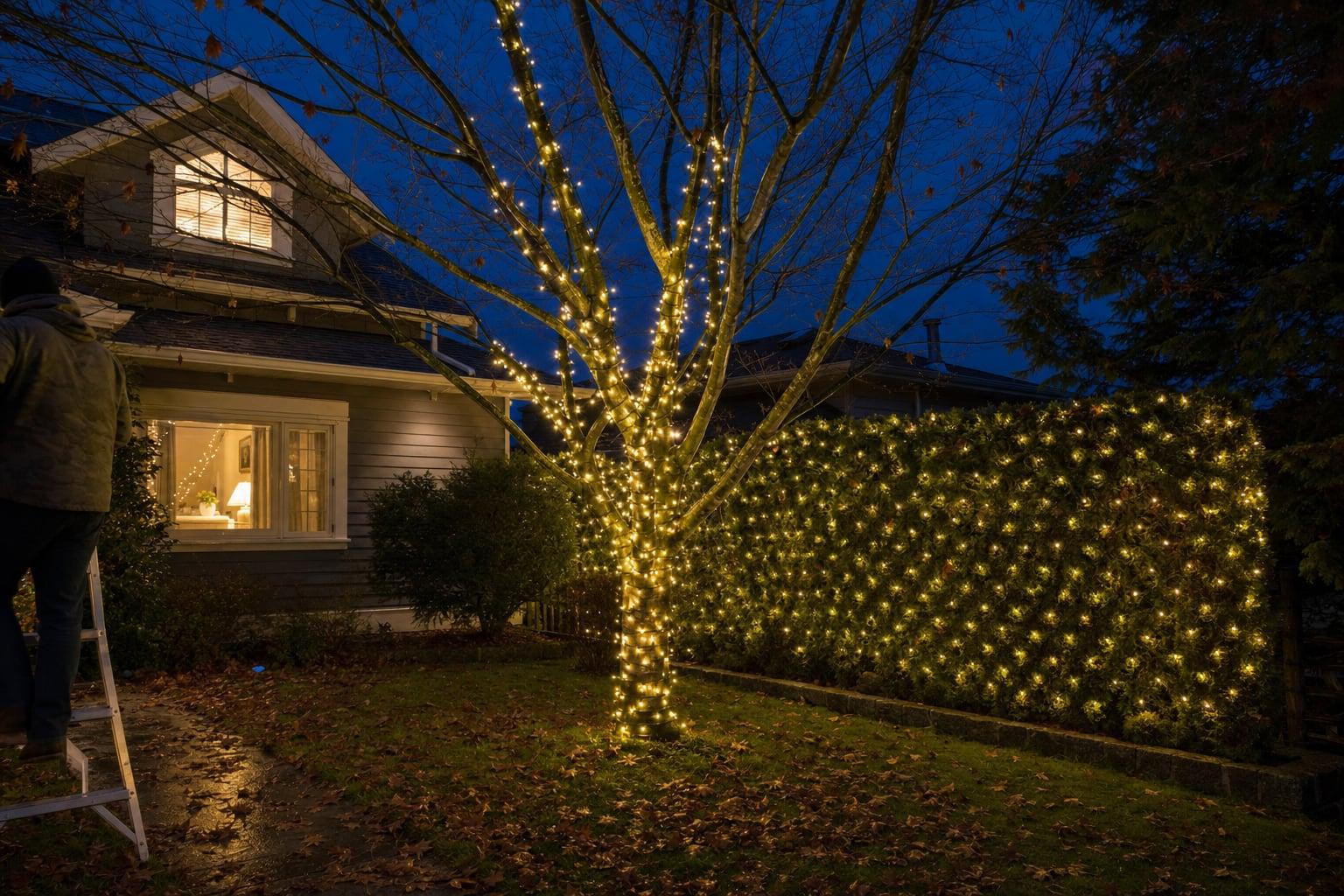
We take down the lights along rooflines, gutters, trees and shrubs. The clips come off with them, so you are not finding plastic hooks on the gutter next summer. If you want the clips left up for next year, tell us when you book.
Every strand is coiled and labelled by area, such as front roofline or porch. That means next year's install is easier, whoever does it. We leave the bins where you choose, or you can ask us to store them when you book.
For a typical house the job is usually quicker than the install, often an hour or two. The price depends on how much is up there and how high it sits. We explain that before we come, so a photo and a rough description help.
We use clips only. No nails or staples go into your fascia or trim.
Lights someone else hung, storms and strata buildings
You do not need to have hired us for the install. If last year's installer cannot be reached, or you hung the lights yourself, we will still take them down. Send a photo and tell us how high they are so we know what is up there.
If a strand has blown loose in a storm, leave it alone when it is near a walkway or a power line. Unplug it only if you can do that safely, then send us a photo and we will come by.
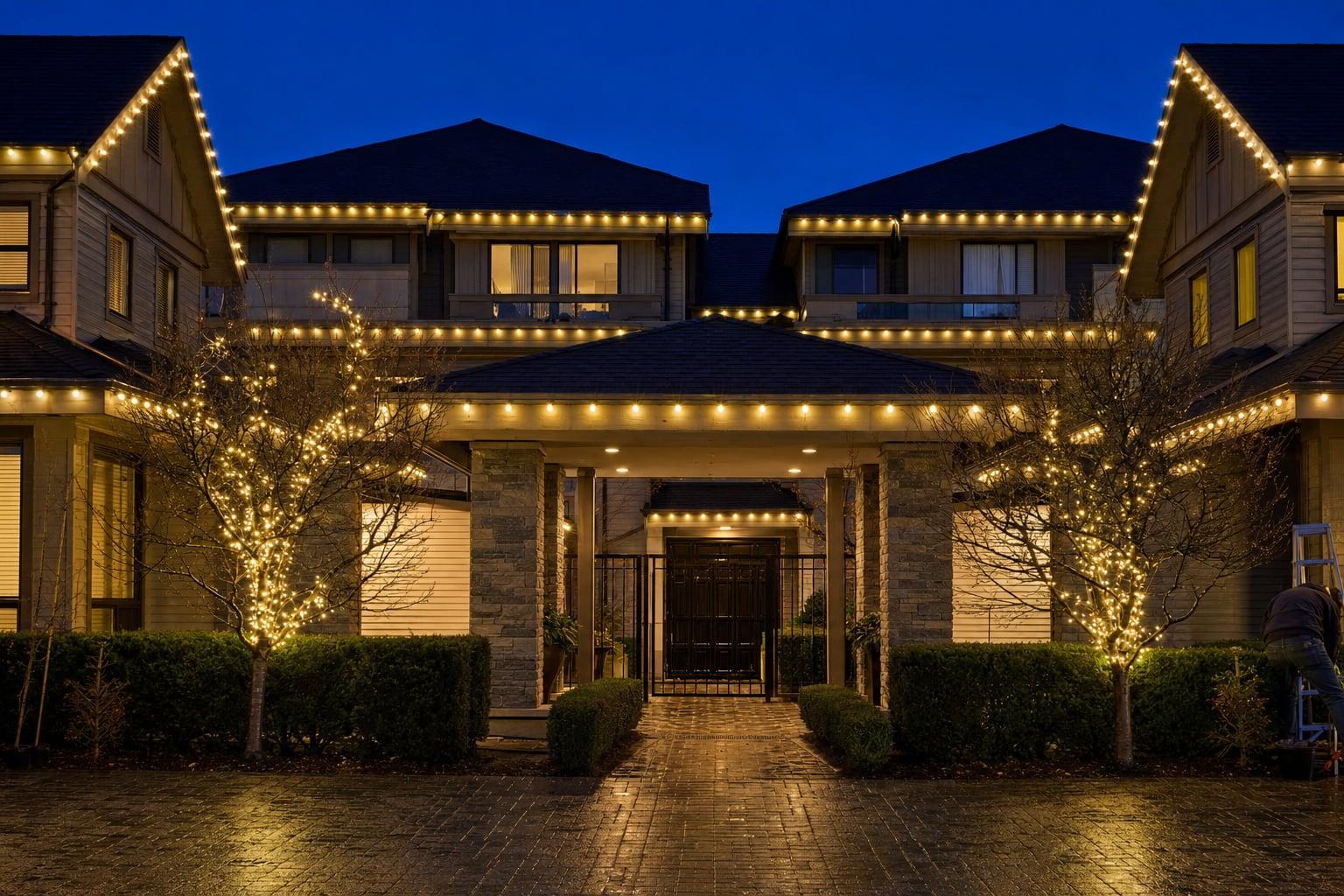
We also work on stratas, low-rise condos and storefronts. Vancouver has a lot of strata buildings, so check with your council or property manager about exterior access before you book. When a roof is slick or the wind is up, we move the work to a safer day instead of pushing through it.